Driving Change
LADOTD's Plan for Transforming Transportation
Our Vision Video Initiatives Project Viewer
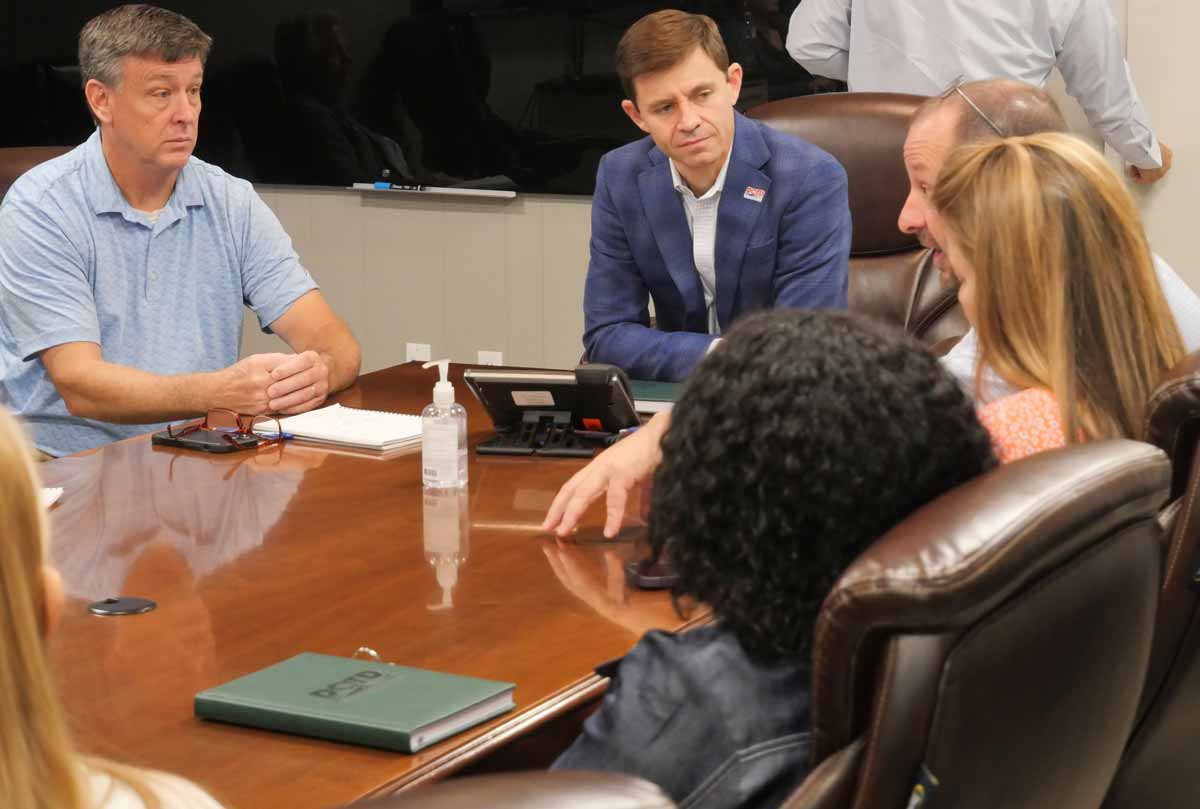
Sparked by Governor Jeff Landry’s executive order, the T4LA initiative—Transforming Transportation with Transparency and Teamwork—is currently underway at the Louisiana Department of Transportation and Development. LADOTD has been tasked with transforming the organization from within. And that’s exactly what we are working to do through T4LA. We are reshaping how we serve the people of our state by enhancing our operations both internally and externally. LADOTD will advance and strengthen transportation for our state with greater transparency and accountability, driving economic development and growth across Louisiana.
T4LA at a Glance

This initiative will revise DOTD’s business processes for selecting projects to include in the annual Highway Priority Program (HPP) and the early steps in advancing those projects. The goal is to ensure the HPP is consistently delivered as promised while also allocating funding based on objective project assessments that include statutory requirements, hard data, citizen input, and economic development.
This initiative will modernize current project management processes, procedures, and organization structure by aligning DOTD with peer-state best practices.
This initiative will overhaul the current Project Delivery process and integrate DOTD best practices into a proven project delivery network (PDN) framework. The PDN is a framework that outlines steps, activities, tasks, and deliverables to provide consistency and transparency throughout the project delivery process, enabling project teams to improve reliability and efficiency through coordination, cooperation, and alignment.
This initiative will pursue innovative means to improve the bridge network, enhance the program’s efficiency, and streamline processes to ensure the long-term success of DOTD’s bridge preservation program.
This initiative will assist with supporting the Office of Louisiana Highway Construction (OLHC) as it assumes the responsibility as the owner of all state-owned Non-Federal Aid (NFA) routes across the state. By establishing clear processes, communication channels, and shared objectives, this effort will strengthen OLHC’s ability to effectively manage and maintain these routes statewide. In addition, the initiative will foster stronger partnerships and enhance collaboration between OLHC and DOTD to ensure the efficient delivery of projects included in HB 2 of the 2025 Legislative Session. This includes both bridge replacements and roadway improvements. Through this coordinated approach, the Department will be better positioned to align project priorities, streamline decision-making, and ensure that resources are used effectively to meet local and statewide transportation needs.
This initiative will analyze DOTD’s Local Public Agency (LPA) Program business processes and organizational structure to ensure the program complies with federal and state requirements and results in the LPAs delivering the projects programmed in the Highway Priority Program (HPP).
This initiative will improve the administration of DOTD’s maintenance program. This initiative will refine how infrastructure condition is assessed, and how resources are allocated to provide the highest return on investment. In addition, this initiative will enhance the training program for maintenance staff to facilitate consistent maintenance practices across the state. The initiative will also assess how the maintenance workforce is utilized to determine the appropriate level of maintenance contracting. New maintenance contracting methods will be implemented as part of the IDIQ initiative. Finally, this initiative will enable DOTD to adopt best-in-class fleet strategy to effectively manage its vehicles and equipment to ensure necessary equipment are available to complete maintenance activities in a cost-effective manner.
This initiative will enhance DOTD’s construction program administration by improving key processes—specifications, change orders, payments, conflict resolution, and cost accounting—aligned with national best practices, organizational updates, and statewide training to ensure consistent implementation.
The initiative will provide additional options for delivery of DOTD construction and maintenance projects through development of procedures for Indefinite Delivery Indefinite Quantity (IDIQ) contracting. IDIQ contracting provides for an indefinite quantity of supplies or services during a fixed period, allowing DOTD to procure goods and services when the exact quantities and delivery schedules are not known.
This initiative will improve the consultant contract administration process to reduce delays in the letting process and centralize administrative functions.
This initiative will study efficiencies related to restructuring the Office of Multimodal Commerce including developing innovative roles in Advanced Air Mobility, realigning current staff to promote efficient operations, and review federal funding opportunities that support ports/waterways, aviation, and rail.
This initiative will help to ensure DOTD is optimizing the agency's role in the NEPA process. Federal statute allows states to assume FHWA's National Environmental Policy Act (NEPA) role, requiring them to follow the same requirements as FHWA.
This initiative will assess DOTD’s current alternative delivery processes. Work will include a review of existing procurement and project delivery processes and the development of recommendations for improvement based on current industry best practices. In addition, this initiative will also document standardized processes and procedures for identifying projects suitable for alternative delivery.
This initiative will develop comprehensive department, office, district, and section-level Key Performance Indicators (KPIs). Development will include identifying national best practices in alignment with DOTD goals and objectives. The development of comprehensive KPIs and identification of the data sources necessary for reporting will include coordination with all impacted offices, sections, program managers, teams, and DOTD’s ongoing efforts related to data governance.
This initiative implements the Smart PM system in support of the newly developed Critical Path Method (CPM) Construction Spec. Smart PM provides statewide standardization by allowing all contractors and project engineers to work form the same information in the form of 35 standard objective criteria.
This initiative will strengthen DOTD’s data governance and accelerate the adoption of advanced technologies — including AI, analytics, automation, and robotics — to improve efficiency, reduce costs, and enhance public-facing services. DOTD will assess emerging solutions used by leading transportation agencies, evaluate internal readiness (workforce, data, and technology), identify feasible near- and medium-term opportunities, estimate required resources, and develop a phased roadmap to integrate high-impact technologies into core DOTD processes.
This initiative will streamline and provide transparency to the Right of Way (ROW) permit process. With the assistance of ESRI, DOTD will eliminate tedious paper applications and provide an online system for the intake and processing of ROW permits. This system will allow a landowner to submit a permit application and follow its progress through the review and approval process. Constant transparency throughout the process will allow internal and external stakeholders to monitor progress, identify roadblocks, and provide accountability. This will also streamline communications between districts and HQ.
This initiative was the direct result of working with DOTDs transition team partners. With assistance from the River Pilot’s Association and NOAA, DOTD secured funding and is facilitating the upgrading of air gap sensors. The I-10 data is now available and portions of the project are nearing completion.
This initiative will centralize and formalize the processes DOTD used for accepting and processing system work requests. A new online portal will collect work requests, track them through the work order process and automate some of the reporting and public engagement functions. The effort is intended to improve customer service, increase transparency, and more efficiently process the thousands of monthly work requests received by the department.
This initiative updated and modernized DOTD website to allow easier access to information and promote transparency across the Department.
This initiative will implement new tools for the development and maintenance of project schedules in the Highway Priority Program (HPP), as well as the rollout of a new Project Status Reporting system. A software solution has been developed to interface DOTD’s current SAP-based project tracking tool with an expanded project scheduling tool, based on the Critical Path Method (CPM) of project delivery. Project data derived from user inputs and newly developed project scheduling templates, as well as behind-the-scenes CPM scheduling operations will be presented on the Project Status Report dashboard, which will support in the delivery of the HPP by providing decision makers with the latest project-related data.
This initiative provides real time information for projects in pre-construction and construction.
This initiative will advance Traffic, ITS, and Safety modernization by expanding the use of data-driven, technology-based strategies to improve mobility, safety, system reliability, and emergency response across the state highway network. The initiative emphasizes early integration of ITS, traffic, and safety into project development, prioritization of critical corridors, and scalable statewide deployment of proven and innovative technologies.
This initiative will include an ongoing effort to provide proactive communications that support all T4LA initiatives.
This initiative will include the revision of the DOTD organizational structure to create the offices of Project Delivery and Transformation while promoting general operational efficiency.
This initiative addresses multiple facets of how DOTD addresses Human Resource functions.
DOTD personnel, including legal staff and subject matter experts, are performing a comprehensive review of DOTD’s administrative rules and other policy documents to ensure consistency, clarity, and compliance with legal requirements.
This initiative will fully implement the Interim Final Rule (IFR) issued by the U.S. Department of Transportation, which took effect on October 3, 2025. In coordination with members of the Louisiana Unified Certification Program (LAUCP) that consists of the New Orleans Regional Transit Authority and the New Orleans International Airport, the Compliance Programs Section will establish a detailed implementation plan. This will include a timeline, specific action steps, a checklist, a standardized narrative form, and updated standard operating procedures.
This initiative will develop departmental policy and procedures necessary for the support of economic development.
This initiative will study Departmental opportunities for alternative revenue streams including but not limited to public private partnerships (P3), tolling opportunities, land leasing for cell towers and other utility infrastructure, sponsorships and naming rights, and shared maintenance agreements with other state agencies and local municipalities.
This initiative will utilize best practices from neighboring states as well as take guidance from Louisiana DOGE, DOA, and the LLA to improve efficiency and unlock capacity for the Department.
This initiative aligns DOTD’s Public Works & Water Resources Sections with the Office of Project Delivery coordinating the structure and authority with Act 418 (2025), which established the Coordinated Use of Resources for Recreation, Energy, Navigation and Transportation (CURRENT) Board & Authority to coordinate upland watershed management, drainage, and resilience planning.
This initiative will assess DOTD’s current workforce policies, practices, and organizational culture influences that impact employee retention and compensation. Efforts will include a review of existing pay structures, Louisiana State Civil Service classification systems, career pathways, performance management, and workforce planning processes, along with an evaluation of employee satisfaction factors. Recommendations will be developed using an approach that aligns compensation with retention strategies, organizational culture, and long-term fiscal sustainability, informed by public-sector and transportation industry best practices.
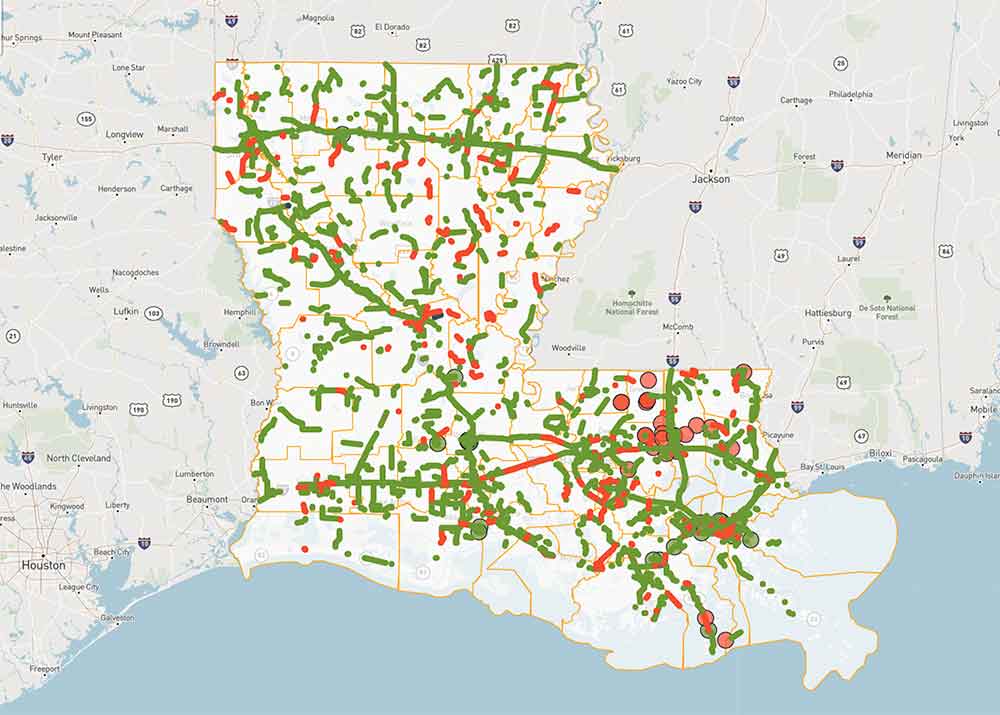
Check out our interactive map to see the latest LADOTD projects in your area—scheduled, under construction, or completed.
Project Viewer »Be the first to hear T4LA updates and stay informed on LADOTD's transportation transformation in Louisiana.